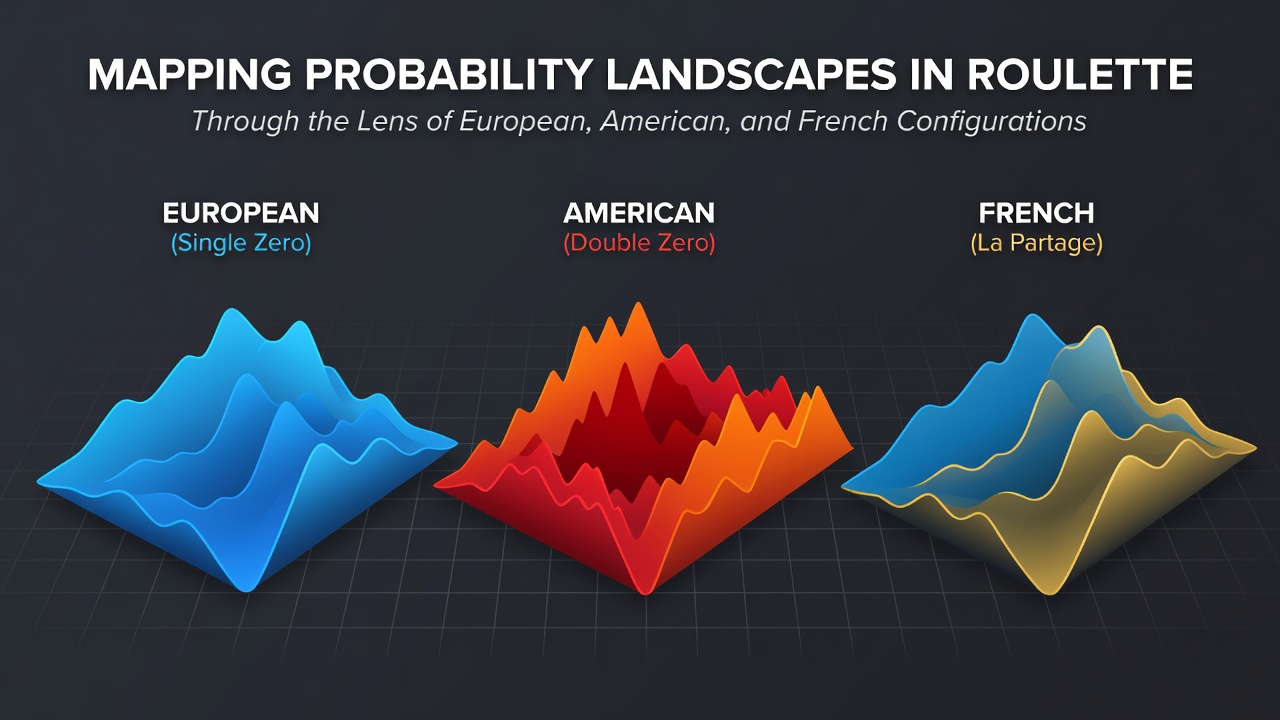
Mapping Probability Landscapes in Roulette Through the Lens of European, American, and French Configurations
European roulette features a wheel with 37 pockets including a single zero while American versions expand to 38 pockets through the addition of a double zero and French layouts maintain the 37-pocket base yet incorporate specialized rules that alter payout dynamics across multiple bets. Observers note that these structural differences create distinct probability distributions where the placement of zeros directly influences the likelihood of outcomes for straight-up bets, outside wagers, and combination plays.
Core Wheel Structures and Pocket Distributions
European configurations arrange numbers from 1 to 36 plus one zero in alternating red and black segments with the zero positioned between 36 and 1 whereas American wheels insert an additional double zero that shifts the sequence and increases the total pockets to 38. French wheels follow the European numbering pattern but operate under a single zero setup that pairs with rules such as La Partage and En Prison which return half the stake on even-money bets when zero appears. Data indicates that pocket counts establish baseline probabilities where a single number in European or French play carries odds of 1 in 37 compared to 1 in 38 on American wheels and these ratios extend across all bet types to form layered probability maps.
Calculating Outcome Probabilities Across Variants
Researchers calculate straight-up bet probabilities by dividing one by the total pockets so European and French formats yield approximately 2.70 percent success rates while American reaches 2.63 percent and outside bets like red or black adjust accordingly with European and French versions providing 48.65 percent chances versus 47.37 percent in American play. Column and dozen bets follow similar patterns where the extra pocket in American roulette reduces overall hit rates by roughly one percentage point across the board and French rules modify even-money outcomes through mechanisms that return portions of wagers after zero results. Studies from academic sources have mapped these distributions by simulating thousands of spins to reveal clustering effects around high-frequency numbers and gaps near zeros that vary by configuration type.
House Edge Variations and Their Impact on Long-Term Play
European roulette maintains a house edge of 2.70 percent across most bets while American configurations elevate that figure to 5.26 percent due to the double zero and French play reduces the edge to 1.35 percent on even-money wagers when La Partage applies. These edges accumulate over repeated spins creating probability landscapes where players encounter steeper declines in American formats compared to the more gradual shifts in European and French setups. According to figures from the Nevada Gaming Control Board, American roulette contributes to higher hold percentages in regulated markets and this data aligns with broader observations that zero placements serve as the primary driver of edge differentials across all three variants.

Regional Regulatory Contexts and Data Trends as of September 2026
Regulatory bodies in North America and Europe track roulette performance through mandatory reporting that highlights configuration-specific metrics and in September 2026 updates from gaming authorities emphasized transparency in probability disclosures for online and live dealer formats. Canadian provincial oversight along with Australian state commissions compile statistics showing how American-style wheels generate elevated house advantages in certain markets while European and French variants appear more frequently in jurisdictions favoring lower edge environments. Industry reports from organizations such as the European Gaming and Betting Association reveal that operators adjust game offerings based on these probability maps to align with player preferences and regional compliance standards.
Bet Type Analysis and Distribution Patterns
Split bets covering two adjacent numbers carry probabilities of 2 in 37 for European and French wheels against 2 in 38 for American and street bets spanning three numbers follow proportional adjustments that maintain consistent relative edges within each configuration. Corner and six-line wagers extend this mapping further with French rules providing occasional mitigations on even-money components that soften the overall landscape compared to the fixed higher edges in American play. Those who have analyzed extensive spin data find that zero proximity creates localized probability dips across all formats yet the double zero in American wheels amplifies these effects into broader negative territories for most bet categories.
Conclusion
Probability landscapes in roulette emerge directly from wheel configurations and rule variations that differentiate European, American, and French formats through pocket counts and payout adjustments. Evidence from regulatory reports and mathematical analyses demonstrates how these elements produce measurable differences in outcome distributions and long-term expectations while regional data from September 2026 continues to underscore the role of configuration choice in shaping player experiences across global markets. Observers continue to reference these foundational mappings when evaluating game selections and performance metrics in regulated environments.