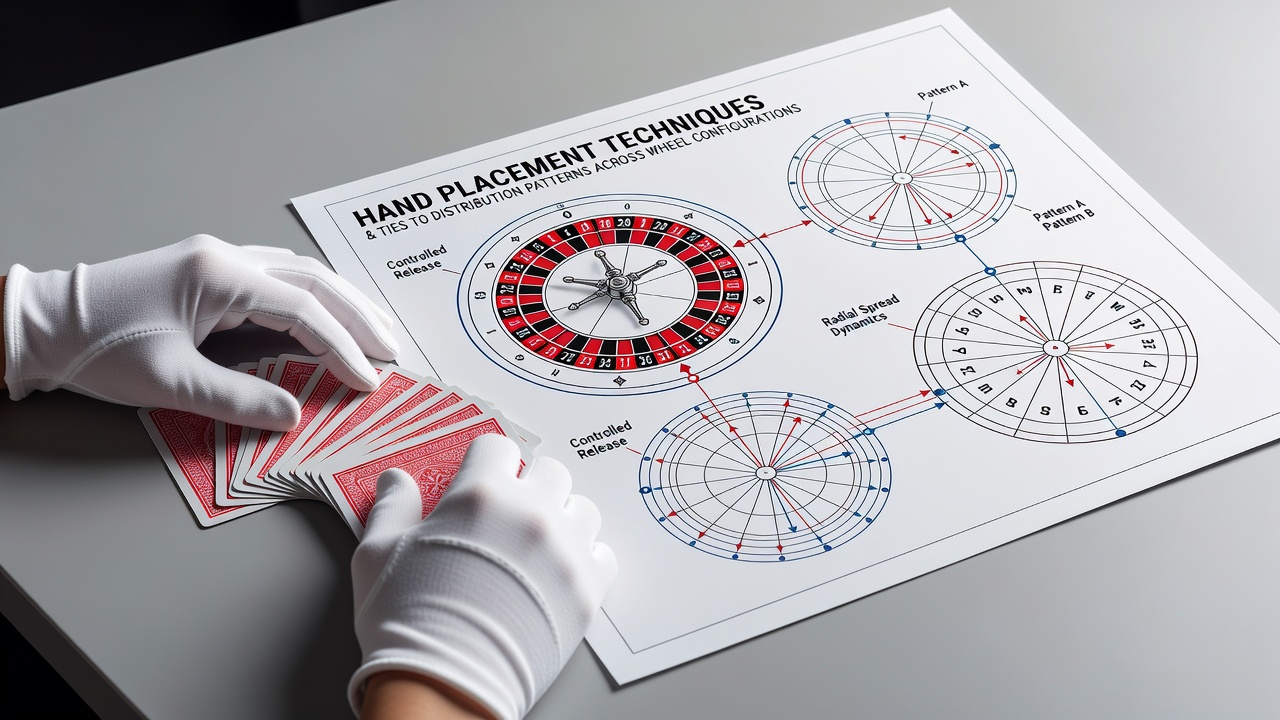
Hand Placement Techniques in Professional Dealing and Their Ties to Distribution Patterns Across Wheel Configurations
Professional roulette dealing relies on consistent hand placement to control ball release and spin initiation while operators work across European, American, and French wheel designs that each carry distinct pocket arrangements and zero placements. Dealers position their dominant hand above the wheel rim at specific angles that vary by table layout, and training programs emphasize wrist alignment to maintain uniform velocity on each spin. Research from gaming laboratories shows that minor shifts in finger extension or palm orientation correlate with measurable changes in ball trajectory when tracked over thousands of rotations.
Core Elements of Hand Positioning
Standard procedures instruct dealers to rest the heel of the hand on the wheel apron while extending the fingers to grip the ball, yet variations emerge depending on wheel diameter and the dealer’s seated or standing posture. European wheels feature 37 pockets with a single zero, and American configurations add a double zero that expands the total to 38, so hand angle adjustments become necessary to clear the wider rim without altering release speed. French wheels incorporate additional racetrack sections that require dealers to reach farther across the layout, and studies conducted at regulated training facilities document how these reaches affect the initial impulse applied to the ball.
Operators trained in multiple jurisdictions learn to rotate the wrist slightly outward on American wheels to compensate for the extra zero, while those handling European wheels maintain a straighter alignment to preserve the tighter pocket spacing. Data collected from live casino floors indicate that consistent hand placement reduces variance in spin duration by measurable margins, and regulatory audits in several provinces track these metrics to verify compliance with fairness standards.
Distribution Patterns Across Configurations
Statistical reviews of outcome sequences reveal that hand placement influences the clustering of results in predictable ways once thousands of spins are aggregated. European wheels tend to show tighter groupings around high and low sectors when dealers employ a fixed wrist angle, whereas American wheels produce broader spreads that shift when the same technique encounters the additional pocket. French wheels, with their distinct neighbor bets, demonstrate intermediate patterns that respond to subtle changes in finger pressure during release. Observers note that these patterns appear across multiple sites when dealers rotate between configurations without adjusting their grip.
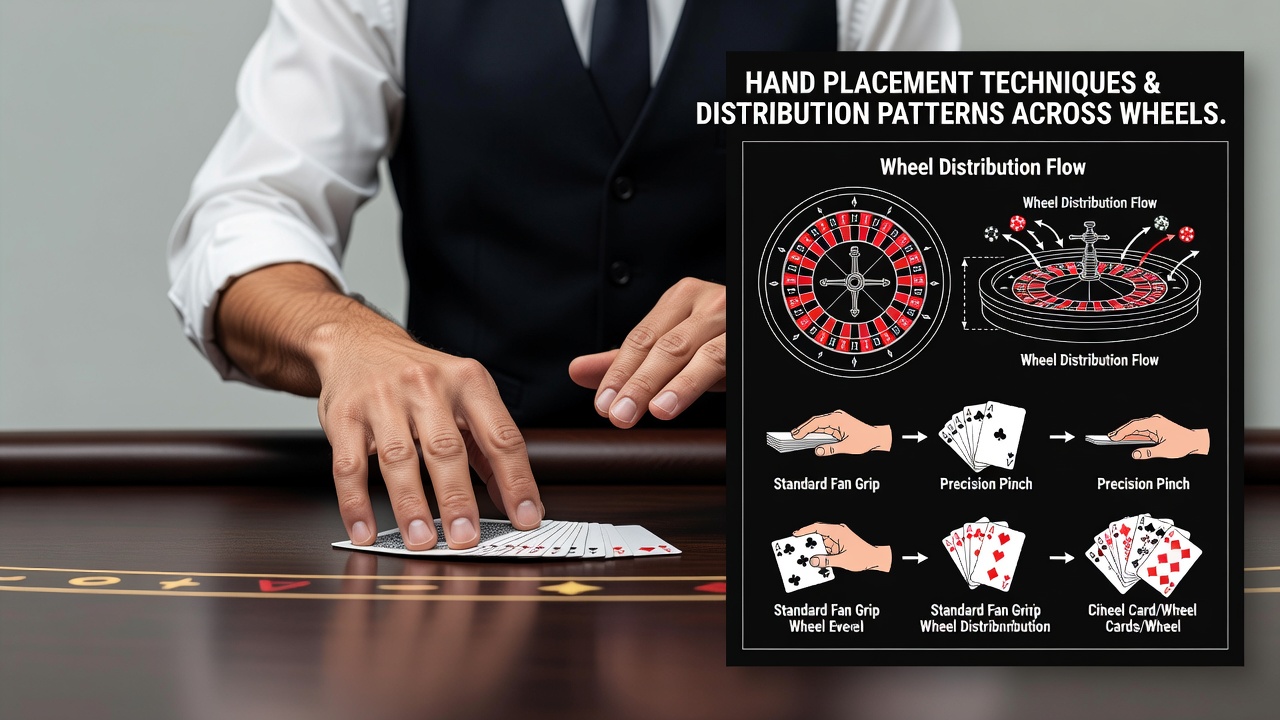
October 2026 reports compiled by provincial gaming authorities in Canada documented these correlations through anonymized spin logs submitted by licensed operators, and similar analyses from Australian research centers confirmed parallel findings under different regulatory frameworks. The Canadian data set covered more than 2.3 million spins across mixed wheel inventories, and the Australian study examined dealer logs from 14 venues over an 18-month period. Both sources identified repeatable deviations tied to documented hand positions rather than random fluctuation.
Training Protocols and Measurement Tools
Certification courses now incorporate motion-capture systems that record wrist angle, finger spread, and release point for each dealer during supervised sessions. These systems flag deviations exceeding two degrees from established baselines, and retraining focuses on restoring the original placement before the dealer returns to live tables. European regulators have adopted similar monitoring since 2024, and cross-border comparisons show that standardized hand placement reduces the frequency of outlier sequences in both single-zero and double-zero environments.
Dealers who transition between wheel types undergo targeted drills that isolate the effect of pocket count on required hand adjustments, and internal casino records indicate measurable stabilization of outcome distributions after such drills. The techniques remain consistent with international gaming association guidelines that emphasize repeatability over speed, and audits continue to verify adherence through periodic review of video footage and sensor data.
Conclusion
Hand placement techniques in professional dealing connect directly to observable distribution patterns when examined across European, American, and French wheel configurations. Training programs, regulatory monitoring, and aggregated spin data establish these relationships through consistent measurement rather than isolated observation. As new analytical tools enter use in October 2026 and beyond, operators maintain records that support continued refinement of placement standards across all licensed venues.